A shorted capacitor killed this iPhone 13. We recovered the data.
A dead iPhone 13 came in with a hard short on the board, no power at all, and the owner's photos on it with no backup. A tiny capacitor on the NAND (storage) power line had shorted internally. We found it with a thermal camera, removed it under the microscope, and the phone booted. The storage was never damaged, the short just blocked the door.
Not in the GTA? We accept mail-in recovery from anywhere in Canada
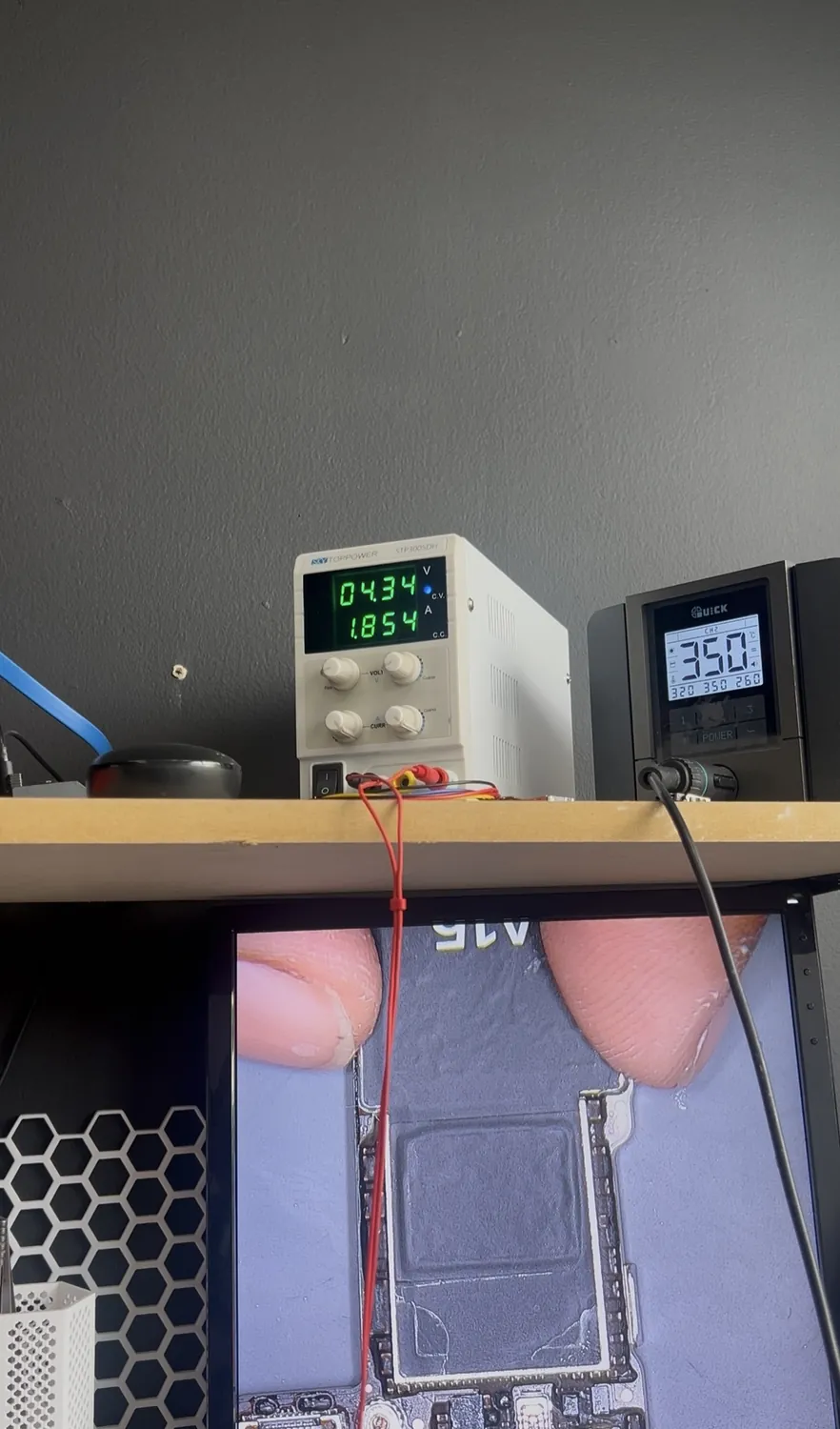
This iPhone 13 was completely dead, no display, no charging, nothing. On a bench power supply it pulled a steady 1.8 amps and sat there: a textbook dead short. Using a thermal camera we found the hot component, a shorted capacitor on the NAND power rail. We removed it under the microscope, the short cleared, and the phone powered on. The NAND (where your data lives) was perfectly fine, so once the board ran, we recovered every file.
The owner thought the phone, and everything on it, was gone. It wouldn't turn on, wouldn't charge, and showed no sign of life. What they cared about was the photos and messages on it, with no recent backup. This is one of the most recoverable "dead iPhone" situations there is, and one most people are told is hopeless.
Step one: the board tells you it's shorted
Before opening anything up, we put the logic board on a bench power supply and feed it the voltage the charger normally would. A healthy phone sips a small startup current. This one pulled a steady 1.8 amps and didn't move. That's not a phone trying to boot, that's a dead short: something on the board is connecting power straight to ground.
Step two: find the short with a thermal camera
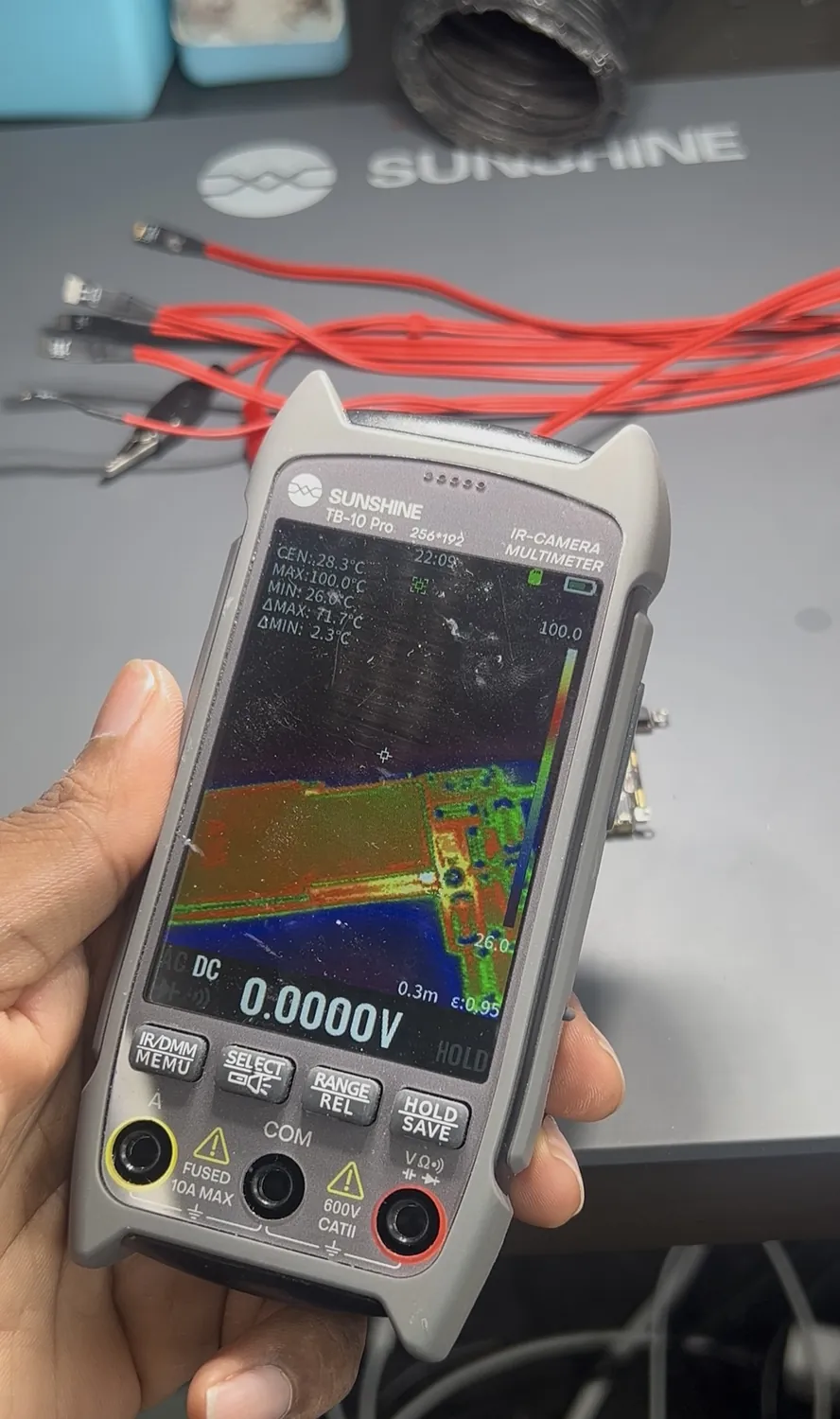
A shorted component carries all that current, and current makes heat. So we feed a small, safe amount of current into the shorted rail and watch the board through a thermal camera. The faulty part lights up as a hotspot while everything around it stays cool. No guessing, the camera points straight at the problem.
The culprit: a shorted NAND capacitor
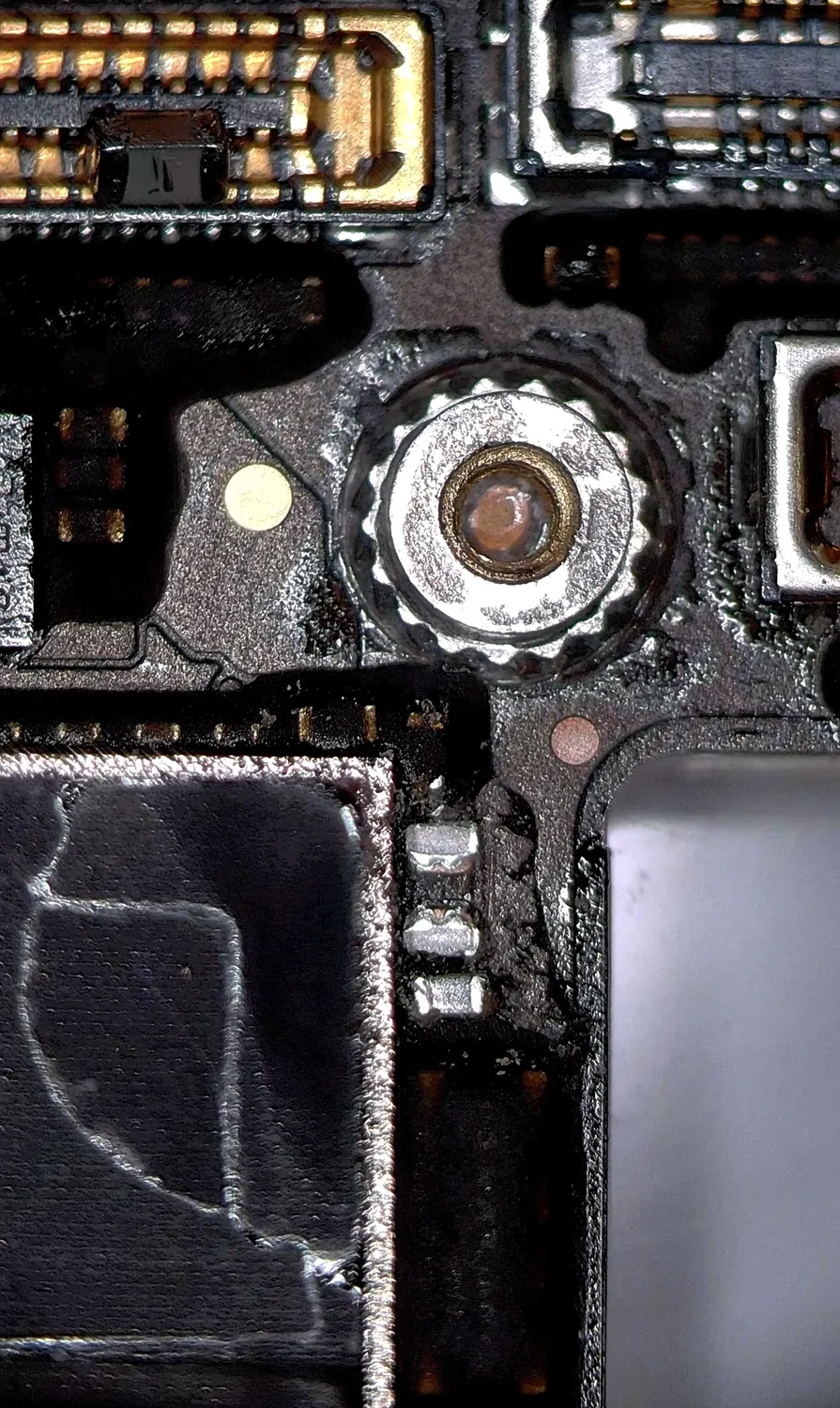
The hotspot landed on a tiny decoupling capacitor on the NAND power line. The NAND is the iPhone's storage chip, the part that actually holds your photos and data. Like every chip, it has small capacitors on its power rails to keep the voltage clean. One of them had failed shorted, tying the NAND's power rail straight to ground. The phone couldn't power that rail, so it would never boot, and it dumped all that current as heat.
Why this is a data recovery, not a write-off
Here's the key: the NAND chip itself was completely fine. Your data was sitting there, intact, the whole time. A single failed capacitor was shorting the rail and stopping the board from powering on. It wasn't a damaged storage chip, it was a $0.02 part blocking the door.
That's why a dead, shorting iPhone is usually a board-level data recovery, not a lost cause. Most repair counters can't test for a short, let alone find and replace the part causing it, so they call it dead. With the right tools it's often a single component.
The fix, and the recovery
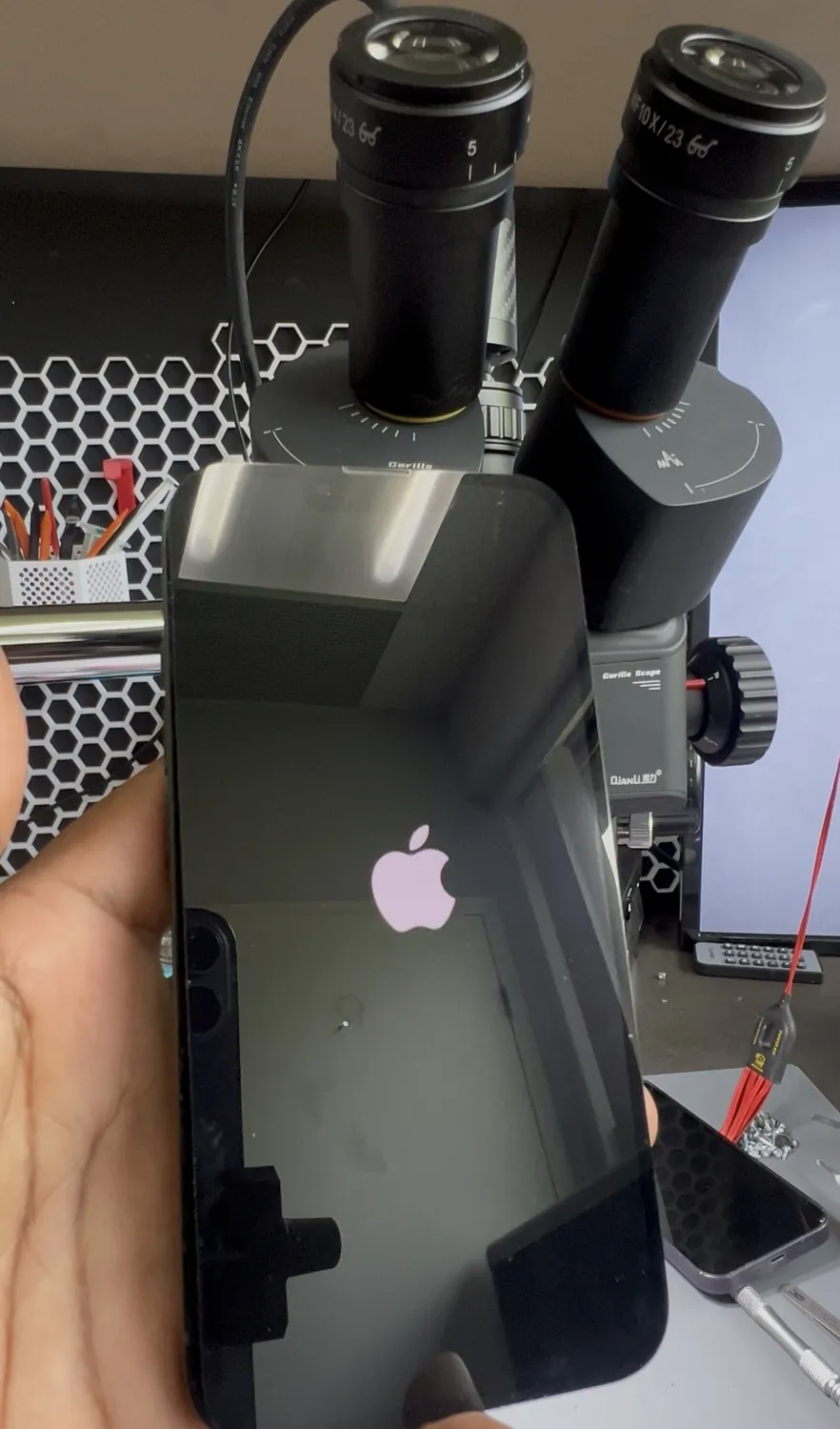
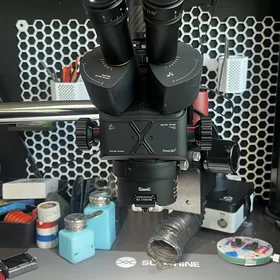
Under the microscope, we removed the shorted capacitor and fitted a fresh one. The moment it came off, the short cleared and the current draw on the power supply dropped to normal. We reassembled enough to power it on, and the iPhone 13 booted straight to the Apple logo. From there, the storage was reachable again and we copied the owner's data off and verified it.
Your data stays private
Worth saying plainly: we don't browse your photos or messages. We recover your data, confirm it opens, and hand it back. If you'd rather, tell us exactly what you need and we'll stick to that. The job is getting your files back, not reading them.
The real lesson: back up
A capacitor can short from a drop, board flex, pressure in a tight pocket, or just a weak part failing over time. You can't always prevent it. What you can do is keep a backup, iCloud or a computer, so a board fault becomes a repair instead of a panic. If this iPhone had a backup, the dead board would have been a simple decision instead of a recovery job.
What it costs and how long it takes
Every board is different, so we don't quote board-level recovery blind. The diagnostic is free: we find the exact fault, then tell you what it'll take and what it'll cost before any work starts. A single-component short like this one usually turns around quickly. You approve the quote first, every time.
FAQ
Can you recover data from an iPhone that won't turn on?
Often, yes. A dead iPhone is frequently a single failed component on the board, not lost data. We test for shorts, find the faulty part, repair the board enough to boot, and copy your files off. The storage chip, where your data lives, is usually fine.
What is a "shorted NAND capacitor"?
The NAND is your iPhone's storage chip. It has tiny capacitors on its power lines to keep the voltage stable. When one fails "shorted," it connects that power line straight to ground, so the board can't power the storage and the phone won't boot. Replacing the failed capacitor clears the short.
Is my data still there if the phone is completely dead?
Almost always. Your data lives on the NAND storage chip, which doesn't lose its contents when the phone loses power. A dead phone usually means the board can't access the storage, not that the storage is gone. Fix the board fault and the data is right there.
Will my photos and messages stay private?
Yes. We pull your files, make sure they open, and hand them back; we're not scrolling through your photos or messages. You can also tell us exactly which data matters and we'll limit it to that.
Can Apple recover the data from a dead iPhone?
Generally no. Apple's process replaces the whole device; they don't repair the logic board to recover your data. Board-level recovery is a specialist job, which is what we do in-house.
How much does iPhone board-level data recovery cost?
Pricing tracks the actual fault, so we look before we quote. The check is free; once we know exactly what failed, you get a firm number to approve before any work happens.
We recover data most shops can't reach.
We trace and repair the board fault on-site, under the microscope, then pull your files off. A dead or shorting iPhone usually still has everything on it. Start with a free diagnostic; you see a firm quote before we touch anything, and your data stays yours.